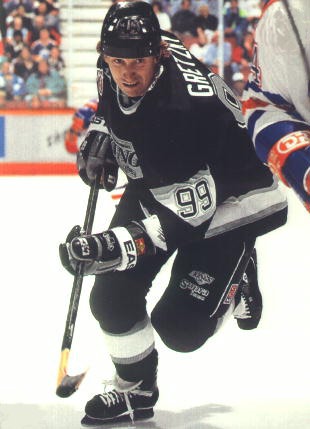
"A good hockey player plays where the puck is. A great hockey players plays where the puck is going to be" - The Great One
Noteworthy links
- Cool breakdown on bounding. You can really see how maximum impact it is and how well bounding improves both running & jumping simultaneously.
- Wooden's pyramid. Again. Because I can never look at it enough. The HBO documentary on his dynasty is truly amazing. Some of the best examples of Flow in sports ever.
- Bolt's NFLability
- More on Bolt, still flying fast. But not at the speed limit just yet.
- Great article on muscle balance with pretty informative ratios broken down by muscle groups.
- Decent article on lifting for beginners. Lots of good info with a bit of fluff thrown in. There's also 2 really good photos of cable punches. Instead of just flat-footed like photos think about being able to explode into the different footwork positions (when your form is good enough to allow you to progress) You want rotational strength? then do cable punches. Want to train your entire upperbody & core in 1 move? then do cable punches.
- MJ's old workout program
Workout:
Movement Prep:
Shot some hoops for 15 minutes
Med-ball
Trained with a partner today and did all 1 armed throws n' catches. Focus was on generating torque & rotational ability, catching everything while centered, and always moving explosively. Lots of throws, squat to throws, twisting throws, and 2-touch throws (catch with left hand immediately transfer to right and explode out, repeat opposite arm)
Cables/Plyos
Mixed in cable punches, squat-to-punch, with lateral shuffles for 40 seconds with mini-bands above knee. 4 sets moving from punches to shuffles, resting 30 seconds, then repeat.
Metabolic Circuit
My legs were still pretty rocked from Labor Day to go heavy so we set up a full-body circuit instead. We were working out at an MMA studio so we had access to a heavybag and lots of open space, which was awesome.
Round1 (1 min each, no rest till finish)
Heavybag: power punches (1 min)
Kettlebell swings (1 min)
Jump rope (1 min)
Rest 1 min
Round 2 (1 min each, no rest till finish)
Heavybag: speed punches
Hang snatches
Jump rope
Rest 1 min
Round 3 (same as before)
Heavybag: switch-kicks
OH squats
Decline sit-ups
Rest 1 min
Round 4 (same as before)
Heavybag: speed combos
backwards walking split-squats
Jump-rope
Round 5:
Heavybag: switch-kicks
kettlebell swings
GHD's
Finished with 3 rounds of plyometric arms swings (30 seconds on: 30 seconds rest)
This week:
Monday: Recovery
Tuesday: Yoga (am) pickup basketball 1/2 court (pm)
Wednesday: Workout above
Thursday: field workout w/acceleration & deceleration emphasis
Friday: Weights
Saturday: pickup basketball & beach volleyball. Endless summer out here. :)
Sunday: More beach.
Stay Frosty,
#40
Friday, September 5, 2008


Wednesday, August 20, 2008
STS 8-20-08 & The Bolt
"Three words Gentlemen: Tempo, Tempo, Tempo." - Godfather, Generation Kill
If anything was going to topple the hysteria & mystique of Phelps, the Bolt of Lightning just did it. Simply jaw-dropping. I hope people recognize what occured these past few days, Bolt winning like he did is the equivalent to Tiger Woods winning the masters by 12+ strokes. He might be the guy to finally make Track & Field cool again. The craziest thing to me when watching the 200 was he easy he made it look. Michael Johnson made it look like work when he was flying, Bolt makes it look fluid & effortless. He's so fast his 200 times would translate over to a 3.53 40-yard dash. Marinate on that for a second. a 3.53 40. He set the 200meter world-record time for his age when he was 15 (a 20.5) , 16, and 17. He's now 22 and we'll probably be watching him break 19 for the next 2 olympics.
Yup. Here it is again. Don't static stretch before sprinting. It has a negative effect.
Static stretching before sprinting resulted in slower times in all three
performance variables. These findings provide evidence that static stretching
exerts a negative effect on sprint performance and should not be included as part of the preparation routine for physical activity that requires sprinting
I don't care that it feels good (of course it does! putting your muscles to sleep should feel good.) Yes, of course flexibility is a crucial part of athleticism, but that's most effectively obtained through dynamic stretching and a static stretching regimine post-workout. Nothing is more ridiculous to me than watching people train to be faster for months and then undercut all their progress by temporarily disabling the elasticity in their muscles right before they step onto the field and put all that work into use. It might be time for you to get over your stretching-I-need-it-mentally-thing and use that time instead to get some more throws in before you play. Just sayin'.
Here's a fantastic article from Alwyn Cosgrove on Metabolic Training. Couldn't find it in link form so here it is in full. He always does a great job of linking movements that complement each other and every thing he does has a purpose. Like always, it's a great framework. You can tweak it around how you see fit to work on your own specific weaknesses if need be. Remember, these movements are about developing your "Pillar Strength" i.e. your hip, core, and shoulder stability. Pillar Strength is the building blocks of your fundamental movement skills, you need a strong base if you ever want to truly improve athletically. Alwyn's program combines that with a metabolically-taxing tempo & linkages of movements so it'll improve your work capacity base as that same time, which is exactly what you want. If this workout looks daunting then try to remember that your brain is 10x's weaker than your body. So test your mettle & push past what you think you can do. You might just surprise yourself.
Metabolic Acceleration Training: A better way
I'm a huge believer in using the "alternating set" system when training. For time management reasons, I tend to do exercise one for a set, rest 60 seconds or so, do exercise two for a set, rest 60 seconds or so, and continue. This allows me to increase work density while still getting "true" rest.
In other words, I perform a set of squats, rest 60 seconds, perform a set of push-ups, rest 60 seconds, and repeat. So in effect, I've almost tripled the rest period between squat sets (60 seconds plus the time taken for push-ups plus 60 seconds) as opposed to using a straight set system. And for fat loss training, it's unparalleled.
However, the biggest problem or complaint I get from clients who use commercial facilities is that it's really hard for them to tie up two pieces of gym equipment at peak hours. I have my own facility, but I realize this can be a real problem elsewhere. So I started experimenting with a few things--doing dumbbell lunges and push-ups for example or step-ups and dumbbell bench presses where I could use one set of dumbbells and one piece of equipment.
It was an okay compromise, but it started to somewhat limit my exercise selection. And to be honest, it still had the issue of people working in and possibly disrupting your rest periods.
So I went a step further. What if I created a fat loss or conditioning program based around one piece of equipment where you stayed in the same spot, using the same load for the entire duration. So I tried it. At first it was awkward, but after reading Istvan Javorek's work and talking with über strength coach, Robert Dos Remedios, I started to implement different variations of combination lifting.
I just hoped that it would work as well as alternating sets for fat loss and conditioning or at least close enough that it wasn't too much of a tradeoff. As it turns out, it worked better! In fact, it worked so well that it became a cornerstone of my conditioning programs with several athletes.
Part twoPart two of the evolution of our fat loss programs came shortly after. I have always recommended interval training as a superior form of fat loss over steady state cardio. Interval training is essentially periods of hard work alternated with easier periods of work using a cardio exercise.
The problem--running a mile doing intervals involves about 1500 repetitions. For someone looking to cut body fat, and hit total body weight training two to three times a week, that is a lot of extra volume and potential joint stress. So I started thinking. Interval training is similar to weight training in that it involves sets (and reps) followed by a rest period (albeit active). What if I used a lighter version of traditional strength training and created metabolic circuits?
Timed sets
This is the simplest variation of metabolic work. Pick a load that is about 80% of your 10RM. Perform as many reps as possible at a constant tempo for a period of time (e.g. 60 seconds) and try to perform as many repetitions with as good form as possible. Rest for 15-30 seconds and perform another exercise.
Example #1
Barbell reverse lunge, left leg, 60 seconds Rest 15-30 seconds
Barbell reverse lunge, right leg, 60 secondsRest 15-30 seconds
Barbell push press, 60 seconds Rest 15-30 seconds
Repeat three times for a 12-minute routine.
Example #2
Kettlebell swings, 30 seconds Rest 15 seconds
Push-ups/burpees, 30 seconds Rest 15 seconds
Prowler push, 30 secondsRest 15 seconds
Repeat for five rounds for a 12-minute finisher.
Metabolic density training
This is a modified version of EDT as popularized by Charles Staley. However, Charles recommends two exercises performed as a superset for 15 minutes. In this case, we are going to use three exercises and work for ten minutes.
Example #1
Dumbbell bench press
Alternating lunges
Swiss ball crunch
In this method, select a load that will allow 10-12 reps and perform sets of 6-8. There is no rest between exercises. Work continuously for ten minutes moving from one exercise to the next. The alternate version is to perform five rounds of 6-8 reps of each as fast as possible.
Complexes
Be warned, these are pretty grueling. Perform the complexes at the beginning of your workout when you're fresh. They'll elevate your metabolism beyond anything you've ever experienced before. The most frequently asked question about complexes is how much load to use. Remember, it's a metabolic stimulus, not a strength or hypertrophy stimulus so be conservative. Now, don't go too light either. A good "Cosgrove rule of thumb" is that if you're not questioning why in the hell you're doing these exercises or convincing yourself that twice around is enough, you're not going heavy enough.
Let's get into it. Perform each complex once per week for four training sessions per week. Use the following progression:
Week one: 4 sets of 5 reps of each, 90 seconds rest
Week two: 5 sets of 5 reps of each, 75 seconds rest
Week three: 5 sets of 6 reps of each, 60 seconds rest
Week four: 6 sets of 6 reps of each, 45 seconds rest.
Then puke.
Complex A
Bent over barbell row
Hang clean
Front squat and push press hybrid
Jump squat (bar on back)
Good morning
Complex B
Romanian deadlift
Hang clean and front squat and push press (combination lift, perform one rep of each in series)
Reverse lunge (alternate legs)
Complex C
Deadlift
High pull (onto toes)
Squat clean (clean the bar from the hang and then drop into a full squat on the catch)
Military press (strict)
Jump lunges (switch legs)
Insert my evil laugh here!
Complex D
Jump squat
Squat
Squat and hold for 10 seconds
Military press
Push press
Squat and press (combination lift, perform one rep of each in series)
Note: Try to work all exercises at a speed of 1-2 reps per second.
Tabatas
A Tabata protocol is a very high intensity anaerobic interval program that involved eight rounds of 20 second work periods at 170% of your VO2 max with a negative recovery period of 10 seconds. The best way to use these with strength training exercises is to alternate one upper body with one lower body exercise. The second progression we used is to vary the work to rest ratio.
Beginner: 10 seconds work, 20 seconds recovery
Intermediate: 15 seconds work, 15 seconds recover
Advanced: 20 seconds work, 10 seconds recovery
A great pairing is squat jumps and running push-ups (a single push-up and two reps of mountain climbers in alternating fashion) in pairs.
Medley conditioning
This is similar to the other methods in that we are working for time, but we will use 15 seconds on and 15 seconds off and perform multiple rounds with different pieces of equipment. For example, an MMA fighter competing in five-minute rounds may use four exercises in a circuit and perform multiple rounds until the five-minute period is up.
Example #1
Prowler push15 seconds, rest 15 seconds
squat jump15 seconds, rest15 seconds,
sledgehammer or medicine ball chops15 seconds, rest15 seconds,
kettlebell swing15 seconds, rest 15 seconds
Keep working through the medley until the five-minute period is up.
Finishers
Finishers are just short body weight or single piece of equipment only, 3-5 minute routines at the end of each workout.
Screamers:
3 push-ups,
1 tuck jump
6 push-ups,
2 tuck jump
9 push-ups,
3 tuck jumps
12 push-ups,
4 tuck jumps
15 push-ups,
5 tuck jumps
Continue to add three push-ups and one tuck jump to each set until you miss a rep. Then climb back down the ladder.
Leg Matrix:
24 squats
12 lunges each leg (alternating)
12 lunge jumps each leg (alternating)
24 squat jumps(If you can complete this in under 90 seconds, do two rounds with no rest.)
Squat series:
20-second squat jump
20-second squat
20-second isometric squat
Repeat for three rounds with no rest.
Countdowns
Select two exercises (e.g. kettlebell swing and burpees or squat jumps and plyometric push-ups).
Perform 10 reps of each, nine reps of each, eight reps of each and so on.
Each week start with one set of one more rep than your top set (e.g. 11 reps, 10 reps, 9 reps, etc.).
A final warning
This isn't for the faint hearted or de-conditioned. They are not beginners' routines. If you're coming back from injury or illness, don't try this program yet. It's brutal. However, if you follow this routine for four weeks, you'll see a very significant improvement in your conditioning and a massive drop in your body fat!
This article originally appeared at EliteFTS.com
Workout
Movement Prep
Shot hoops for 15 minutes, lots of lateral movement off the dribble and pulling up for the J. I'm totally gonna bring back the mid-range jumper.
Med-Ball Work
Did everything today 1 handed, just for fun.
1 arm rotational tosses against wall w/catch - 15 each arm
1 arm sumo-squat toss (start in full squat with ball next to ankle on the outside) - 15 each arm
1 arm split-squat vertical toss w/jump (hold ball just under chin like shot putter, throw ball up as you switch legs in the air) - 12 each arm
1 arm toss to sprint- 8 each arm
Cable Work
Tons of cable chops, cable punches, squat-to-cable punch, and push/pulls (like these, but with a cable in both arm so you truly get the push/pull action)
Functional Exercises
1A: OH Squat- 30 seconds moving as fast as possible with proper form.
1B Jumping pull-up w/tuck
2x's through
2: Hang clean
2 sets
3A: Hang Snatch
3B: 1 Leg'd squats
2x's through
Core Circuit
3x's through resting only when possible.
Decline situps
Standing twists w/weight
Floor wipers
This Week:
Monday: Recovery
Tuesday: Yoga (am), Field work w/sprint mechanic emphasis (pm)
Wednesday: Workout above
Thursday: Field work w/lateral agility emphasis
Friday: Heavybag work & throwing practice
Saturday/Sunday: Practice, practice, practice
#40
Thursday, August 14, 2008
STS 8-14-08
"No. I want to be the first Michael Phelps." - The man himself, in response to being asked if he hoped to become the second Mark Spitz.
With the Olympics in full swing I'm having trouble concentrating on anything else except for watching the games, mostly in awe at the sheer athleticism, as usual. And we're not even at the field events yet. Man I can't wait for the decathlon. The true greatness of the games is that it showcases every type of athleticism you could think of (and some you've never even fathomed) all in different platforms, all in 2 weeks. When watching swimming the part that is the most amazing to me is the extension (especially through the hips & legs) that the athletes get with their bodies. They just get crazy l-o-n-g in the water.
I do find it tragically hilarious that coke & mcdonalds are 2 of the biggest corporate sponsors of the olympics though. 2 of the biggest contributors to the obesity epidemic cozying up to the greatest displays of athleticism is such a ridiculous oxymoron. That's like budweiser hanging out at an AA meeting. Just goes to show again how intertwined fast food & soda are in our society, which sucks as it makes an uphill battle even tougher. Good thing there's that whole personal responsibility thing then, I guess.
Coupla noteworthy links:
- Cool article on phelps
- Vern Gambetta has been on roll lately, challenging you to think further & further about the whole system to develop complete & balanced athleticism. As always it's about a complete comprehensive program (use it or lose it), perfecting fundamental movement skills then progressing to sports-specific skills, and continually working on your weaknesses. Athletic development is no different than any other type of development: you get out of it what you put into it. Simple. As. That.
- More on a balanced program
- More on Flow
- The maze. It's been said before by others many times, but I really like the idea of working in blocks (this article states 4 weeks). Makes things much easier to break down. As Magic Johnson said: you must set small goals to reach big goals.
- new ross video. This guy fires me up so much.
- more food for thought.
Workout
Movement Prep
Standard stuff, lots of jump roping today
Med-Ball
3-throw sequence 5x's through with mini-band shuffles mixed in
Cables
First off, by cables I mean the freedom-allowing cable machines with the arms that move vertically and horizontally, (like this)not the old-school square frames with cables that just move vertically and restrict movement. I f'ing hate machines that restrict movement.
I mixed in a bunch of standing cable chops, cable punches (both punching to the side for rotational strength, and punching downwards while exploding into a lunge) and other full-body cable movements with some plyos work.
Some of the plyos I worked in:
- Box march w/mini bands above knee
- sitting box-jumps
- Lateral shuffle w/mini bands above knee
Functional Lifts
- split-squat quick drops- same as video but split-squat instead of standard squat
3 sets alternating legs
Finished with a sick squat complex
1A: quick drops- original style
1B: OH Squat
1C: Thruster
Finished with a set (each arm) of 1-arm kettlebell swings moving as fast as possible with proper form for 30 seconds.
Core/Upperbody Circuit
- GHD's
- jumping pull-ups w/tuck
- 1 leg GH situps
- Dips
- Side Plank
2x's through resting only when necessary
Go USA!!
#40
With the Olympics in full swing I'm having trouble concentrating on anything else except for watching the games, mostly in awe at the sheer athleticism, as usual. And we're not even at the field events yet. Man I can't wait for the decathlon. The true greatness of the games is that it showcases every type of athleticism you could think of (and some you've never even fathomed) all in different platforms, all in 2 weeks. When watching swimming the part that is the most amazing to me is the extension (especially through the hips & legs) that the athletes get with their bodies. They just get crazy l-o-n-g in the water.
I do find it tragically hilarious that coke & mcdonalds are 2 of the biggest corporate sponsors of the olympics though. 2 of the biggest contributors to the obesity epidemic cozying up to the greatest displays of athleticism is such a ridiculous oxymoron. That's like budweiser hanging out at an AA meeting. Just goes to show again how intertwined fast food & soda are in our society, which sucks as it makes an uphill battle even tougher. Good thing there's that whole personal responsibility thing then, I guess.
Coupla noteworthy links:
- Cool article on phelps
- Vern Gambetta has been on roll lately, challenging you to think further & further about the whole system to develop complete & balanced athleticism. As always it's about a complete comprehensive program (use it or lose it), perfecting fundamental movement skills then progressing to sports-specific skills, and continually working on your weaknesses. Athletic development is no different than any other type of development: you get out of it what you put into it. Simple. As. That.
- More on a balanced program
- More on Flow
- The maze. It's been said before by others many times, but I really like the idea of working in blocks (this article states 4 weeks). Makes things much easier to break down. As Magic Johnson said: you must set small goals to reach big goals.
- new ross video. This guy fires me up so much.
- more food for thought.
Workout
Movement Prep
Standard stuff, lots of jump roping today
Med-Ball
3-throw sequence 5x's through with mini-band shuffles mixed in
Cables
First off, by cables I mean the freedom-allowing cable machines with the arms that move vertically and horizontally, (like this)not the old-school square frames with cables that just move vertically and restrict movement. I f'ing hate machines that restrict movement.
I mixed in a bunch of standing cable chops, cable punches (both punching to the side for rotational strength, and punching downwards while exploding into a lunge) and other full-body cable movements with some plyos work.
Some of the plyos I worked in:
- Box march w/mini bands above knee
- sitting box-jumps
- Lateral shuffle w/mini bands above knee
Functional Lifts
- split-squat quick drops- same as video but split-squat instead of standard squat
3 sets alternating legs
Finished with a sick squat complex
1A: quick drops- original style
1B: OH Squat
1C: Thruster
Finished with a set (each arm) of 1-arm kettlebell swings moving as fast as possible with proper form for 30 seconds.
Core/Upperbody Circuit
- GHD's
- jumping pull-ups w/tuck
- 1 leg GH situps
- Dips
- Side Plank
2x's through resting only when necessary
Go USA!!
#40
Wednesday, August 6, 2008
STS 8-5-08 Head Games & The 'wood
"A dog is forever in the push-up position"- Mitch Hedberg
Cool Links:
- The man himself on flow. The Theory of Flow is really, really interesting as it extends much further than the field and into all facets of life. Like a jazz musician in his element, flow is so f'ing beautiful to see on the field. Most people can't articulate it, but everyone knows it when they see it.
- it's all in your head.
- suspension training
- agility techniques
- these dudes= mad athletic. That's hip mobility/stability at it's finest.
- Cool study on the "hot hand" of basketball. Pretty applicable to ultimate, especially given how streaky our sport can be.
- interesting article on the validity of recovery methods.
Workout:
I just moved from the Eastside back to Hollyhood again. Among the many, many awesome things about living in the 'wood (if you don't the others you really should come visit here. Trust me.) is that I'm back to being a couple blocks away from Runyon Canyon. RC is simply awesome, yoga in the grass every evening, tons & tons of trails to hike, and at the top you're standing at the same height as the Hollywood sign (just one hill to the west) looking out in the basin below. After the rain when the smog is cleared out you can see from Pasadena to Catalina. Not too shabby of a view. the city looks okay too. :)
I started off the workout with a full-body circuit consisting of:
- 1 arm kettlebell swings (w/dumbbell)
- plyo-pushups
- pullups
- 1 leg squats
- ab wheel
4x's through resting only when necessary. Did this in my living room for all you i-hate-going-to-the-gym excuse people.
Jogged up the canyon till I got a to a part I call Hurdler Hill. It's about 40 yards with soft dirt/sand at the bottom and two seperate 2-foot "walls" of hillside near the top that you have to hurdle over to keep going, with every step uneven. In 1 40-yard sprint you get sand training, hurdling, and uneven ground work for proprioception skills & foot/ankle stability. SICK. Did 7 sprints up, resting at the top, then "sprinting" down working on minimal ground contact time and quick feet (which is pretty much the only way to do it without falling down the hill).
Jogged up a bit further till I got the start of the trail that leads up to the top. This trail is soft sand all the way, with steep uneven stairs, chunks of concrete mixed in from when it was paved long ago, and wood 4x4's barriers that make for either great hurdles, or steps to spring off of for some sprint-to-jumps. Just tons of cool terrain to creatively challenge your legs, every single step is a new one. The trail to the top is easily 3/4's of a mile, so I broke it up, sprinting as far as I possibly muster, resting till my lungs stopped burning, then off again. My focus was on making every step explosive & minimal ground contact time while keeping a proper uphill forward lean with explosive arm drive through the shoulders.
The best part is the run back down. There's a couple great not-too steep sections that are about 100 yards long and you can just fly running downhill in the soft dirt, hurdling over the 4 x 4's. Overspeed training is the sh*t. Just fluid through the hips, leading with the core. I did the hill twice, then sprinted all the way down running as fast I possibly could downhill. My lower abs were straight burning at the end from stabilizing out in front.
So yeah, training uphill running (which forces proper running form), ankle/foot stability, leg/foot proprioception, plyometrics, and downhill (overspeed) training all at the same place. As it should be.
Med-Ball Field Workout
Only had a quick 1/2 hour at the park to get in a workout today. The medicine ball is the best way to kill yourself metabolically in a short amount of time.
Movement Prep
Standard plyos
Throws
- 30 sumo squat-to-toss throwing the ball backwards w/jump, then turn n' sprint to catch on 1st bounce.
- 40 overhead slams w/jump. Arms & ball slam down, body jumps up, core stays stable. Dissasociation at it's finest.
- 30 front-squat vertical tosses w/180 jumps. Stand with med ball in front squat position, jump squat and do a 180 in the air, land in a squat, explode out with toss, catch on 1st bounce, repeat. SO sweet for training proper landing mechanics.
- 20 side tosses to 15 yard sprint (each side). Don't fight the energy of the ball, harness it to propel you into your sprint.
- 25 chest-passes to 15 yard sprint
Finished with med-ball burpees to failure.
This week:
Monday: Recovery
Tuesday: Runyon Canyon
Wednesday: Med-ball field workout above
Thursday: Summer League
Friday: weights
Saturday: field workout w/agility emphasis
Sunday: beach workout
#40
Friday, July 25, 2008
STS 7-25-08 & Wednesday Night Lights
"Don't worry about the world coming to an end today. It is already tomorrow in Australia." -Charles M. Schultz

Photo from the Condor vs. Dingos Scrimmage
Some cool links:
- This guy is the mothaf'ing man. IOC tells him he can't compete, and he responds by breaking his personal best. That's what I'm talking about.
- From the perform better seminar
- barefoot running
- What it's like to workout with Alwyn Cosgrove. Great article. And you thought my workouts were tough.
- The A-11 offense that's got every football coach on it's ear right now. Smart stuff, lots of options. Again proves how much innovation is possible within a set system of rules.
- sprint training for endurance competitions
- Lessons from Mike Boyle
- Dingos in the news
Wednesday night we had the excellent opportunity to scrimmage the Aussie National Team. We managed to get the sweet, sweet synthetic fields at Occidental College in LA, and it was a great night for SoCal Ultimate. Playing under the lights always get me fired up and we had a great crowd come out to see the action. I still can't get over how fast the fieldturf surface is...too much fun. The Dingos are tall, athletic, disciplined, and seemed to be all clicked in with each other as they've been practicing & playing together for a while now. We started off slow, had trouble adjusting to their physical underneath man D and had some defensive miscues, spotting them a 9-4 lead at half. Definitely not how we wanted to start things out. But we maintained our poise like true Condors, we knew we still had a lot of game left and just focused on making some key adjustments. We finally busted the deep game wide open in the beginning of the 2nd half, and also started playing some sick Team D, tightened our marks, and forced some turns. Went a nice 11-5 run where our offense was really clicking & moving with flow, and some of our rookies stepped up huge and made big plays on D to bring it to 15's. We traded to 17's (game to 19) and had the ball to take the lead for the first time but turned it on a huck. They marched it back up patiently for the score, then closed it out on the next point after a lay-out drop to take the W. The game was extremely well-spirited, clean, and one of the most fun experiences I've had playing disc. We took over a sweet LA bar afterwards with the crowd and showed 'em a good time droppin' carbombs like rain. Funny post-game story: A group of the aussies stopped at the Taco Truck outside the bar for some food and they ordered one of the guys (the captain I think) a tongue taco which he devoured without knowing. They still hadn't told him by the end of the night, hope he's finally figured out that that wasn't carne asada...
Workout
Movement Prep- Same story, see previous posts if you need details.
Med-ball
30 1-arm front-squat vertical tosses (each arm)
20 side-twists throw against wall w/catch (each side)
Plyos Skills & Drills
1. Sitting box jumps
2. Split-squat jumps
3. Box lateral shuffle with weight overhead (locked arms)
Functional Lifts
1. Split-squats w/weight- as fast as possible for 30 seconds with proper form. rest 1 minute, repeat alternating leg. Twice through
2. Hang Snatches- 3 sets
3. RDL's- 3 sets
Core Sequence
Moved from swiss-ball pikes, side plank, leg lifts w/med ball between leg, and standard plank. 3 times through, each exercise to failure. Resting only when necessary.
#40
Monday, July 14, 2008
STS 7-14-08
"You ever see a cheetah stretch?" - Deion Sanders
You know you miss primetime
This makes me so f'ing happy. Ultimate being shown for what is really is: athletic, especially on an industry-recognized website. Also some great information on jumpability.
- Vern Gambetta on athleticism
- Decent video on acceleration
- Good ideas for mini-band training
- Breaking down the nervous system
- Muscle fatigue: it's all in your head
- Good information on Tabata Intervals
Workout
Movement Prep- same shizzle, different dizzle
Med-ball- 3-throw sequence
Throw 1: sumo-squat vertical toss
Throw 2: Overhead slam
Throw 3: front-squat vertical toss
5x's through the sequence with no rest between throws. Moved immediately from there to mini-band shuffles & high-knees. Repeat 3x's.
Plyos Skills & Drills
1A: Cable Punches
1B: Outside-in Stepups- stand over small plyo box with legs on the outside. Step up explosively with left leg onto box followed by right, then back down to floor in same sequence. Focus is on landing everytime with no noise (minimal ground contact time + explosive fast-twitch movement). Alternate starting leg 2nd time through.
2x's through resting only when necessary
2A: Split-squat jumps
2B: depth push-ups
2x's through resting only when necessary
Functional Lifts
1A: Crossover Step-ups
1B: Jumping tuck pull-ups
2x's through resting only when necessary
2: Overhead Squats (30 seconds focusing on moving as fast as possible with absolute pure form)
3 sets, with 1 minute rest in between.
3: 1 arm snatches
1 set each arm
Core Circuit
A: GHD's w/swandive
B: Hanging leg raises
C: Standing twists w/weight
D: Side Plank
2x's through with no rest
This Week:
Monday: Workout above (AM); throwing workout (PM)
Tuesday: Field work w/agility emphasis
Wednesday: Basketball (AM); throwing workout followed by heavybag work (PM)
Thursday: Strength Training
Friday: Recovery
Saturday: Surfing & beach sprints
Sunday: Field work with plyometric emphasis
Hit it hard this week!
#40
You know you miss primetime
This makes me so f'ing happy. Ultimate being shown for what is really is: athletic, especially on an industry-recognized website. Also some great information on jumpability.
- Vern Gambetta on athleticism
- Decent video on acceleration
- Good ideas for mini-band training
- Breaking down the nervous system
- Muscle fatigue: it's all in your head
- Good information on Tabata Intervals
Workout
Movement Prep- same shizzle, different dizzle
Med-ball- 3-throw sequence
Throw 1: sumo-squat vertical toss
Throw 2: Overhead slam
Throw 3: front-squat vertical toss
5x's through the sequence with no rest between throws. Moved immediately from there to mini-band shuffles & high-knees. Repeat 3x's.
Plyos Skills & Drills
1A: Cable Punches
1B: Outside-in Stepups- stand over small plyo box with legs on the outside. Step up explosively with left leg onto box followed by right, then back down to floor in same sequence. Focus is on landing everytime with no noise (minimal ground contact time + explosive fast-twitch movement). Alternate starting leg 2nd time through.
2x's through resting only when necessary
2A: Split-squat jumps
2B: depth push-ups
2x's through resting only when necessary
Functional Lifts
1A: Crossover Step-ups
1B: Jumping tuck pull-ups
2x's through resting only when necessary
2: Overhead Squats (30 seconds focusing on moving as fast as possible with absolute pure form)
3 sets, with 1 minute rest in between.
3: 1 arm snatches
1 set each arm
Core Circuit
A: GHD's w/swandive
B: Hanging leg raises
C: Standing twists w/weight
D: Side Plank
2x's through with no rest
This Week:
Monday: Workout above (AM); throwing workout (PM)
Tuesday: Field work w/agility emphasis
Wednesday: Basketball (AM); throwing workout followed by heavybag work (PM)
Thursday: Strength Training
Friday: Recovery
Saturday: Surfing & beach sprints
Sunday: Field work with plyometric emphasis
Hit it hard this week!
#40
Tuesday, July 8, 2008
STS 7-8-08 & The Development of Power
"The season is not about maintenance; it's about manipulation"- Dr. Craig S Duncan
"The most effective way to boost power is to lift weights rapidly. This trains muscles to contract quickly and react appropriately when it is necessary to exert force.- Mike Boyle"
Back at it again after a quick break. Summer has been stacked n' packed in the best kind of way, with 2 weddings, birthday, vegas, the 4th, and a full training schedule. Too much fun. Hope your training is progressing solidly as the season ramps up.
Some awesomeness:
- Impossible is nothing
- Some sweet stairs action. Check out the jump-to-sprints, among other things. Landing mechanics with flow= where it's at.
- Switch kicks. My new favorites.
- more impossible is nothing. So dirrty.
- A great video to get you thinking about your field workouts. where could you go from here? how could you incorporate a disc into these?
- Cool article on athleticism. Obviously as subjective as it gets, but still smart.
- Titans gettin' in on some kettlebell action
- Vern on recovery
- Ross with some great reads
- Once again proving how little we really know about the human body. This is just Mind-boggling.
- Such a great article on power. Another must read for any athlete.
Power is the ability to exert great force in a short period of time and
results in being able to move quickly and explosively, says Mark Verstegen,
founder of Athletes’ Performance in Tempe, Ariz. His facility specializes in
training competitive athletes, teaching them, among other things, to accelerate
and change direction quickly. That ability is developed by lifting weights
rapidly and helps athletes move more explosively during games and
other competitions.
A significant degree of power is the efficiency with which your nerves
communicate and your muscles respond to the need to apply force.
Workout:
MP- standard, see previous posts for description.
Med-Ball
20 front-squat vertical tosses
20 sumo-squat backwards tosses (against wall w/catch)
25 side twists each side
20 chest throws in lunge position (against wall w/catch)
Plyo Skills & Drills
1A: sitting box jumps
1B: depth push-up
2A: Box jump march
2B: Jumping pullups w/tuck
Jump Shrug
2x's through resting only when necessary
Functional Lifts
1: Hang Clean
2: Split Drops- same as these, but into a split-squat instead of regular squat. Love these.
3A: Overhead Squat- as fast as possible with proper form for 30 seconds.
3B: Walking superman pushups- 8x's (stand, walk hands all the way to front, perform superman pushup, walk hands back to standing)
3C: 1-leg squats (use the bench like this video if necessary)
2x's through each one resting only when necessary.
Upperbody/Core Circuit
40 arm swings w/5lb each hand
GHD's
GHD sit-ups
2x's through no rest. Finished in just under 55 minutes.
Couple of off topic items:
- A teammate of mine just bought a 40lb sandbag at OSH for $2.50. Yeah, that's right. 100+ difference awesome exercises for $2.50. That whole $$$-excuse for not lifting just got tossed out the window.
- Something that bugs me about the top teams in Ultimate is their unwillingness to share pertinent information with each other. I'm not talking about set plays, specific strategies, or other proprietary information (of course that information stays in-house, as it should.) I'm talking about frameworks of smart drills or Energy System Development (work capacity) programs, etc. Concepts that make the sport better for everyone. But for teams & players to straight stonewall each other, (especially mutually-respectful teams & players) just makes no sense to me and shows a lack of athletic professionalism. It's a very different attitude in other sports. HS football coaches meet the week before and trade game films. (college and pro's don't because tape is already available for them. Unless of course, it's defensive play signals. :) They do this for the same reason I post my so-called "secrets" in full view of my competition. First, because there's a HUGE difference between knowing about something and actually incorporating it into a progressive comprehensive program. And then actually bringing those refined abilities and combining them with your throwing skillset and incorporating it into the actual game. Secondly, because it's silly to think you could keep anything a secret anyway, the information is going to get out there somehow, most likely by a teammate changing teams and bringing what they've learned with them. So you're really just delaying the inevitable. But mostly because my philosophy of preparation & competition runs a little different: You can have my training, you can know what I do; and it won't matter for a second. Because I'll still beat you with it. Because you won't train as intense as I train. And you won't put train in as many creative combinations as I do. Your drills won't be as mentally & physically demanding as mine are. So you can watch all the tape you want on me (I'll even give it to you) and think you know all my tendencies; I'll just beat you with my 2nd & 3rd options. Because it's not about what the other team does or knows; it's only about what my team does.
So don't stonewall. Show some professionalism and give a smart framework that promotes thinking so that that framework can eventually trickle down and be passed along to all the other college, league, & youth, etc teams in that area that that team influences. It's not going to hurt your team (if giving away a drill hurts your team, you've got much bigger issues than drill strategies) and it's the only effective way to advance the sport: from within. Props to The Huddle for recognizing this and doing an fantastic job of getting smart information to players and promoting the on-field advancement of the sport. Only good things can come from the sharing of information like this.
My strong makes your strong look like cottage cheese,
#40
Subscribe to:
Posts (Atom)